What are the stages of conflict resolution?
The great Mahatma Gandhi once said that “an eye for an eye will only make the whole world blind.” However, conflict is part and parcel of every society. It even infiltrates the various departments within an organization, threatening to shake the strong foundations that keep companies afloat. Conflict often arises when an aggrieved party clashes with workers or managers within the organization.
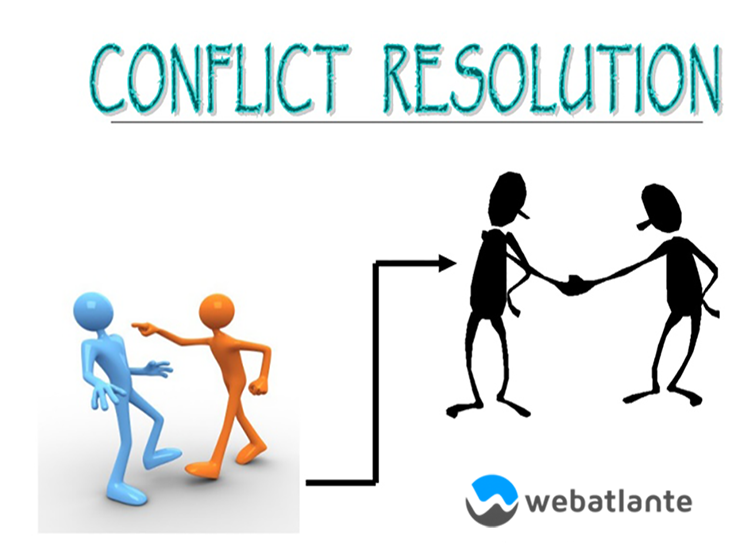
Consequences of conflict
Workplace conflict often causes employees to get frustrated because they doubt whether their issues will ever be resolved. It also causes bitterness and alienation among employees, especially when some members feel unrecognized or left out by others. Consequently, employees develop negative mental states including stress, anxiety and depression. This has adverse effects on their personal and professional lives. Employees with conflict issues experience loss of appetite, sleeping issues, headaches and fowl moods throughout the day. This has adverse influences on their work performance. Sadly, nobody is immune to organizational conflicts.
Why do managers fail to resolve conflicts?
Some managers don’t find it necessary to learn the crucial skill of conflict resolution. They think that conflict is a normal issue that disappears with time. Others simply don’t make time to learn this basic skill. They think it’s a big hassle that will consume a lot of their personal time. And who’d rather waste an entire week attending a conflict resolution workshop when he’d be skiing happily in the Alps? On the other hand, some managers don’t believe that conflict at work can ever be resolved. However, this view boils down to the individual’s attitude and probably his/her upbringing. It’s time managers took the bull by its horns and learnt how to resolve conflicts among workers.
The 5-stage approach of conflict resolution
Stage 1: talk to the involved parties privately
Convene separately with both individuals involved in the conflict and listen to their side of the story. This process allows both sides to air out their grievances calmly and concisely. Since you’re the mediator, you should maintain a neutral, unbiased opinion. Let them know that the protests they’ve raised are valid. The aim is to reach an amicable solution, not to assign blame.
Stage 2: resolving the conflict quickly
The mediator needs to act rapidly and bring the conflict to a speedy halt. By delaying, you allow a serious issue to escalate and trigger a terrible disaster. Despite how intense the disagreement between two parties might be, managers must patiently assess the situation and control the outcome. Brevity and open-mindedness is required during conflict resolution.
Stage 3: be empathetic when discussing the situation
The manager acts as a negotiator during conflict resolution. He/she must therefore explain to employees the need to cooperate and reach a mutual understanding. In this stage, managers allow distraught workers to vent their issues and express themselves fully. They only interject when seeking clarification of confirming the evidence presented to them. Mediators who listen are more likely to solve disputes better.
Stage 4: establish goals by finding mutual ground
Any employee who’s involved in conflict often feels like the other party is personally out to impair them. However, the manager should explain how conflict not only affects their personal relations but also hinders organizational productivity. First identify where the particular conflict stems from, then lead both groups to an amicable solution where they can agree on the damaging nature of the issue at hand. When the aggrieved parties appreciate each other’s perspectives, a consensus can then be reached.
Step 5: reach a fair consensus
Once a manager reveals the truth of the conflict, amicable solutions can then be discussed. The mediator remains neutral and flexible till a mutual solution arises. Let both parties explore all possible options to solving their conflict, then figure out which option provides the best outcome. Managers should ensure that both parties participate in thediscussion so that a mutually supported conclusion can arise.
How can WebAtlante help?
Webatlante is an exquisite HR management software that can facilitate and even enhance conflict management issues. Our software includes a shift management module that eliminates any shift conflicts that may arise among your employees. There’s also a tasks module that allows you to delegate roles more effectively. You’ll love how dramatically Webatlante will enhance your company’s performance and smoothen operations across the board.